lunes, 2 de julio de 2012

International Certifications

Ayudantía


In the link below you will find our ppt with the information about Toefl IBT.http://www.mediafire.com/view/?ovu48mt64ls42u6


And also you can find the summary that we gave to our classmates in this link: 

viernes, 1 de junio de 2012

Classroom Assessment

Ayudantia


Classroom Assessment: A Plea for Change

1. - What is the purpose of this paper?
The two purposes are:

1.    Compare and contrast the psychometric perspective with the edumetric assessment perspective.
2.    Explain the principles and parameter of language assessment in different places.
The author regards the advantages and shortcomings of these topics for the education paying particular attention to the language

2. - What is the meaning of the concept “negative washback”?

A negative washback is the effect that depends from a negative situation. This effect occur when the teacher only teach for students that could answer different test or when the student do not have motivation.

3. - Do we have negative washback in Chilean schools? Examples

Yes, we have a negative washback and they are:
SIMCE: Because teachers choose their best students to perform these tests, leaving behind those who do not understand the matter was explained in class.
Monthly evaluations: teachers use the same exercises on the evidence seen in classes, which are the same results.
Homework: Students search online information about any given work in class. They just copy the information without write it in their own words.

4. - Do you think the psychometric test suits a language evaluation? Why?

We think that a language evaluation of this kind is not the most appropriate. Because it does not reflect what the student learnt). We think in terms of language, the most important thing is to be able to speak and express ideas. And in any question with multiple choices, the student could not prove that. By the other hand, these kinds of test are equal for everyone, and that is not right. In what respect in second language, everyone learn in a different way, so the progress will never be the same. So the evaluation should focus in every student. Learning a language is not the same as learning the capitals of some countries, therefore would not have the same form of evaluation. Even when for a teacher is easier to evaluate written tests (like the comprehension of a lecture) than oral tests (for example make a conversation about chosen topic by the students). It is not good because the students must to say what they are thinking or what they like, much better in the foreign language.

5.-Why does the author use the word “plea” in the title?

We think that the word plea used for the author, means an attempt to show why a specific system of evaluation it is not the right one. Because he put emphasis that we have to pay attention to all the factors that interfere with the process of learning in a student. And sometimes a wrong way to evaluation will not show if the student learnt o not. It is about worry what a student learnt and not what the mark he got.

viernes, 18 de mayo de 2012

martes, 8 de mayo de 2012

Activity 14

May 7th, 2012
Reflection


—- SIENTE USTED QUE ESTA ASIGNATURA LE AYUDA A COMPLIR EL PERFIL DE EGRESO DE LA CARRERA? DE QUÉ FORMA? POR QUÉ NO?
REFLECT ON THIS QUESTION AND WRITE A COMMENT IN YOUR PORTFOLIO


lunes, 23 de abril de 2012

Activity 12 and 13

April 23th, 2012

Assessment Instruments

Group Work

Create and design a draft rubric/checklist/ ranging scale for you own class portafolio. Use the references given in the last session. 
  
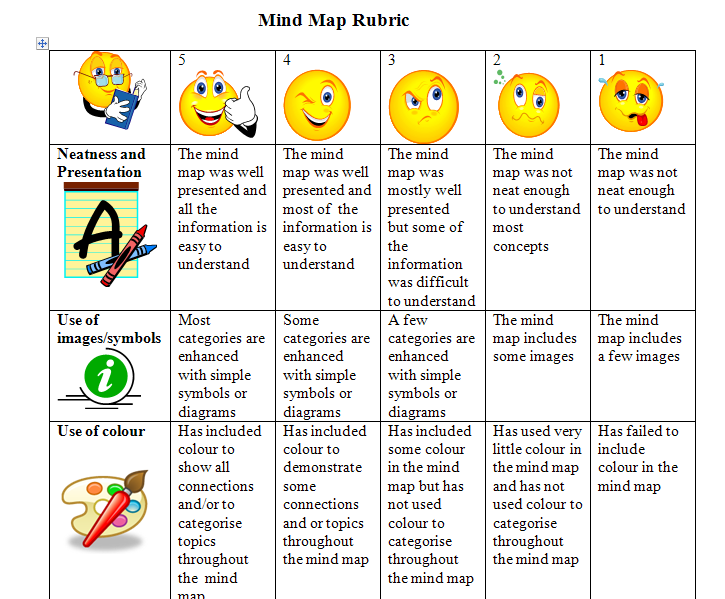
In the link below you will see that we chose the rubric for evaluate our own blog and also why we chose the rubric. 


miércoles, 18 de abril de 2012

Activity 11

April 17th, 2012

Observation Techniques

Which do you think is the best? why? 

The rubric, because I think is more fair. Because the student already know the parameters of evaluation.

What is a rubric? 


  • A rubric is a scoring guide that seeks to evaluate a student's performance based on the sum of a full range of criteria rather than a single numerical score.
  • A rubric is an authentic assessment tool used to measure students' work.
  • Authentic assessment is used to evaluate students' work by measuring the product according to real-life criteria. The same criteria used to judge a published author would be used to evaluate students' writing.
  • Although the same criteria are considered, expectations vary according to one's level of expertise. The performance level of a novice is expected be lower than that of an expert and would be reflected in different standards. For example, in evaluating a story, a first-grade author may not be expected to write a coherent paragraph to earn a high evaluation. A tenth grader would need to write coherent paragraphs in order to earn high marks.
  • A rubric is a working guide for students and teachers, usually handed out before the assignment begins in order to get students to think about the criteria on which their work will be judged.
  • A rubric enhances the quality of direct instruction


  • lunes, 16 de abril de 2012

    Activity 10

    April 16th, 2012
    Assessment Types and Procedures

    Assessment can be divided into three stages: baseline assessment, formative assessment, and summative assessment .
    • BASELINE ASSESSMENT: establishes the "starting point" of the student´s undertanding.
    • FORMATIVE ASSESSMENT: provides information to help guide the instruction throughout the unit,
    • SUMMATIVE ASSESSMENT: informs  both the student and the teacher about the level of conceptual understanding and performance capabilities that the student has achieved.
    Some formats, and the stages of assessment in which they most likely would occur, are shown in the table. 

    miércoles, 11 de abril de 2012

    Activity 9

    April 11th, 2012

    Assesments Principles


    Compare and contrast the 5 principles above with the Assessment for Learning 10 principles. What principles are the most relevant? Why? 

     The most relevant principles are: 


    • Determining and clarifyng what is to be evaluated, because it define the purpose of evaluation..
    • Selecting evaluation techniques in terms of the purposes to be served, because the evaluator needs to select the one wich serves his/her purpose best. 
    • Combining a variety of evaluation techniques for comprehensive evaluation: make evaluation comprenhensive, different types of evaluation procedures should be adopted depending on their suitability for testing the various objectives..An evaluator more evidence of different aspects of student achievement on different objectives and it helps him/her evaluation of the student achievement more consistent, because more the evidence better the evaluation.


    martes, 10 de abril de 2012

    Concept of Evaluation


    Evaluation is an important component of the teaching learning process. Also is crucial to mention that it is continuous process, where the teacher obtains concrete evidence about their students’ behavior. With the result of evaluation, the teacher became an expert in terms of interpret the results. And at the same time evaluation is done in terms of comparison.

    Ø  Continuous process: is well known that evaluation should be done in every moment during a course. Because students are always learning and they need to know if they are right or wrong.

    Ø  Concrete Evidence: The evaluation is evidence of each student, and the teacher can see if they improve their knowledge or not. Because you collect information related to what they know and how much they know about something.

    Ø  Interpret the results: the teacher after they know the result of the evaluation should take in consideration the strengths and weaknesses of their class. And he can realize of the level of the whole class and of each student.

    Ø  In terms of comparison: the teacher should compare between what he intended to obtain with what he really obtain as a result of the evaluation.

    lunes, 9 de abril de 2012

    Activity 8

    April 9th, 2012

    Types of Assesments


       What do you think you have learned today regarding assessment?

    I think that we assess to find out their performence, skills, knowledges of students. Also Find out how they are doing their task. Arter assessing, we use the result to improve the focus of own teaching. Also to focus student attention on strenght and weakness. In other points is used improve program planning, and for reporting to parents. 

    martes, 3 de abril de 2012

    Activity 7

    April 3rd, 2012
       Evaluation, Assesment and Measurement

    Activiy 1 : Work with a partner and answer the following:


    1) What is assessment? 

    Is a systematic continuous process. Its objective is cooperative. It is formative focus on process-oriented.

    Assessment should be viewed as important diagnostic tool to help the student in their knowledges and growth.


    2) What is a measurement?
    It is mainly converned with collection or gathering of data. The measureent involves assigning a score on a given task performed by the learner. 


    3) What is the relationship of evaluation, assessment and measurement? 
    Evaluation involves assessment and measurement. We evaluate in all moment and we use the result to improve the focus of own teaching. 

    lunes, 2 de abril de 2012

    Activity 6


    April 2nd, 2012
    Class Activity6
    A Good Evaluation 
    Activity 1:
    Analyse a test:

    Do you think it´s a valid test? Why?
    Do you think it´s a reliable test? Why?
    Do you think it´s a practical test? Why?
    Do you think it´s a useful test? Why?
    Do you think it´s a fair test? Why?

    Activity 2:
     if one or several uestions in acitivty 1 have been answered negatively, suggest ways in which the test could be improved. Some questions that could help you improve the test are?

    Are the objectives of the test clear and explicit ? How do you know?
    Are the number of questions adequate for the test? How do you know?
    Do the questions actually test what you were  supposed to test? How do you know?
    How do you know the test as a whole is evaluating what it was supposed to evaluate?

    domingo, 1 de abril de 2012

    Activity 5


                                                                                                                   March 27th, 2012
    CLASS ACTIVITY 5

    A GOOD EVALUATION

    Characteristics of good evaluation

    - Validity: A valid evaluation is one which actually measures the behavior described by the objective(s); under scrutiny the teachers should known firstly the level of pre-knowledge of their students.

    -Reliability: Is when the evaluation produces the same result under different but comparable conditions. The evaluation should reflect the objectives. A valid test includes reliability but a reliable test sometimes is not necessarily valid.

    -Practicability: procedure of evaluation should be realistic, practical and efficient according to the reality of the context in which evaluation takes place.

    -Fairness: it refers that the teacher must tell the student what kind of test he is going to use and how they are going to be evaluated.

    -Usefulness: An evaluation is useful when the teacher works with the result that students got. Giving an appropriate feedback in which they can know in what aspects are weak or strong and how they can improve. And if the teacher does the right feedback the student will be more aware of their achievement. 

    Activity 4


                                                                                                             March26th, 2012

    CLASS ACTIVITY 4

    THE ROLE OF EVALUATION

    Activity: class discussion.

    a)     What are the major elements of teaching-learning process?


    The major elements are:
    - Objectives: serve as a guide not only to the teacher but also to the student.
    -    Learning experiences:
    -   Learning appraisal:

    b)     Define learner appraisal

    Involve concerning of the teacher. The students criticize the way they learn. Without experience learning there is not learning appraisal.

    c)      Give 4 important aspects of evaluation

    The 4 important aspects of evaluation are objectives: learning experiences, learner appraisal and the relationship between the three.


    Activity 3


                                                                                                             March 20th, 2012


    CLASS ACTIVITY 3

    PSYCOMETRIC AND EDUMETRIC APPROACHES


    Psychometric Approach: Referred to norms, it is about static. It is selective focus in the group result and has a unique score. Differentiate the high performance group and the low one.

    Edumetric Approach: Referred to criteria, reflect where the student is (in term of knowledge), individual performance and give points by objective achieve, It has a relationship with the objectives, It is coherent with the student and they what know.

    The agents involved are: the teacher, the student, the student´s peers, and the parents. 


    1) What type of test is this?

    It is a Psychometric test, which is made by norm and it compares performance of each student with the performance of the average performance of the members of the group.

    2) What is its aim?

    Its aim is to find the "best for", it does not really evaluate the skills of each student, it just compare you with the rest of the group and tries to measure the group performance.

    3) What is it trying to measure?

    It is trying to measure how fast the person is, compared with a group of people


    Activity 2


                                                                                                                       March 19th, 2012

    CLASS ACTIVITY 2:

    NEED AND IMPORTANCE OF EVALUATION


    Activity 1:
    1.     - List 2 activities from classroom situations which involve decision making by the teacher
              First, we think about oral presentations in which the teacher manages what      the student should do and how could be the presentations through rubrics.  Second when the student should do some physical activities the teacher has to be always with them, telling them what to do modifying the exercises if they are not able to do that.
    2.      - List 2 important aspects related to the teaching process in which evaluation is needed.

    When the teacher wants to know which is the level of the class as a group/individual to see their previous knowledge.  And after the teacher teaches something so through an evaluation he can observe if the student learnt or not.


    Activity 1


                                                                                                                March 13th, 2012
    CLASS ACTIVITY 1

    INTRODUCING THE CONCEPT OF EVALUATION

    Activity 1: work in groups, read the questions and write an answer that the entire group agrees on (20 minutes).


    1.In what way would evaluation serve you as a teacher? What would you use it for?

    It would serve for us, to know if the students achieve the purpose that we set before. Also with the result of the evaluation we can monitor the progress that the student has had. After we made the evaluation we can realized of the weakness and strength of each student and at the same time help to improve the ones who need it. With the result of the whole class the teacher can realized if his method of teaching is effective or if he need to change it.


    2.- In an ideal school, how do you imagine student´s evaluation would be?

    Something in which the teacher not only let knows the grade to the student but also guide them so they can continue improving.


    3.- Think in a moment in your school/university life where an evaluation was pleasant. What were the characteristics that made it pleasant?

    We remembered an English class, because the teacher was always motivating us and she trust on us. Also she told us as why we had that grade and in which aspect we were weak.


    4.-  In general, what do you think students expect from an evaluation?

    We think the students expect from an evaluation that teachers evaluate that they taught and not other content. Also the results of the evaluation reflect what they learnt.

      
    5.- What types of evaluation do you know?


            The types of evaluation that we know are formative, accumulative and summative.  Also these types could be applied in pair, individual or group of students. Using items multiple choices, true or false, and open question.